At Mwene-Ditu, an Irish soldier could spend the day guarding the camp, collecting water and securing an airstrip, then return to a tent with no electric light and no shower.
There was no piped water, no proper recreation space and little relief from the tropical heat. Even washing required a military operation: men travelled more than five miles to a muddy river, filled barrels and brought the water back under armed protection.
For the soldier waiting to wash, the nearest thing to a shower was a bucket with holes in it. Getting clean was not a comfort provided by the camp. It was another duty for men who already had more than enough to do.
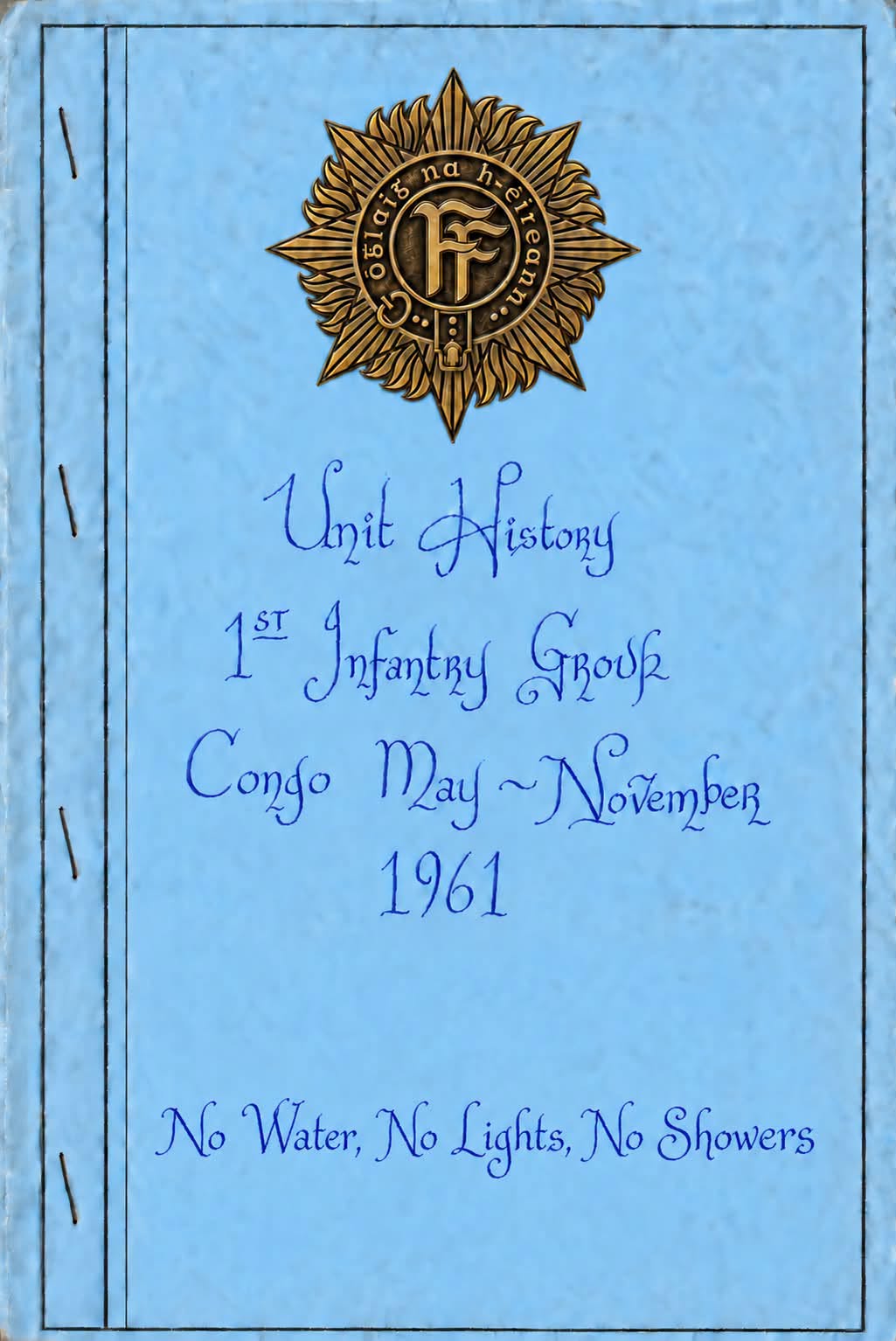
The original history of the 1st Infantry Group gives a blunt account of life at this position in South Kasai. There was no water supply in the camp, no electric lighting and no space for outdoor recreation. Most of the men lived in tents. Three small bungalows, themselves in poor repair, served as the officers’ mess, Medical Aid Post and sick bay, with limited accommodation for some officers.
The ground was low-lying. Little breeze reached between the tents, making the tropical heat harder to bear. Trenches and defensive positions occupied the space that might otherwise have offered somewhere to stretch out or kick a ball.
This was where the men were expected to rest between duties.
WHEN GETTING WATER BECAME A PATROL
Mwene-Ditu had no piped water. A diesel pump supplied a community trough approximately three miles from the Irish camp.
Each morning, local soldiers, Irish troops and townspeople queued for water. The unit had a 500 gallon trailer which, once filled and chlorinated, barely met the cooking requirements of the 170 troops in camp.
The security situation meant this was no ordinary collection run. Sentries and lookouts had to be posted at strategic points while the water was drawn.
Washing water required a separate journey. The town pump operated only in the early morning, so another patrol travelled to the river to fill tin barrels.
The unit history describes that water as muddy brown and unfit for drinking, even after chlorination. It nevertheless provided a means of washing bodies and clothes.
For a shower, there was the improvised bucket.
DINNER DEPENDED ON THE NEXT AIRCRAFT
Food brought its own difficulties.
Local fruit and vegetables were limited and poor in quality. Flour was supplied to the town’s hotel, which baked bread for the troops. Most other rations arrived by aircraft or helicopter from Luluabourg, but deliveries were irregular.
Sometimes the food arrived too late to prepare the evening meal.
The alternative was often tinned luncheon meat and tinned tomatoes. The history credits the Irish ration packs with preventing hungry days in the bush.
Behind those few lines were cooks trying to feed tired men with whatever had actually arrived, rather than whatever should have arrived.
REST WAS THE FIRST THING TO GO
The duty figures for 12 July 1961 tell their own story.
Thirty men were on the main guard, 30 were listed as resting, 24 were assigned to water collection, 24 to the airfield and 44 to an operational patrol.
That accounted for 152 personnel before normal administrative work, sickness and hospitalisation were considered.
When an aircraft arrived, troops had to secure the landing strip before it could land. Water still had to be collected. Camp sanitation demanded daily labour.
The history records the consequence plainly: men resting after guard duty had to be used for water and airfield duties.
Veterans will recognise what that means. Coming off duty did not necessarily mean getting your head down.
WHAT THE MEDAL DOES NOT SHOW
For families looking at a Congo medal or an old photograph, these details matter.
They explain something that a posed picture cannot: how much work lay behind keeping a small overseas position functioning, before its soldiers could even begin the wider job they had been sent to do.
The unit history records that morale remained high despite the conditions. That deserves recognition, without pretending the hardship was acceptable or easy.
Water had to be fetched.
Meals had to be made.
Guards had to be relieved.
And tired men still had to turn out.
That, too, was service in the Congo.
Source: Original 1st Infantry Group Unit History, May to November 1961, Military Archives, particularly the Mwene-Ditu account on PDF pages 7 - 8.