There are moments when representative bodies stop merely representing grievances and start sounding an alarm.
This week may have been one of those moments.
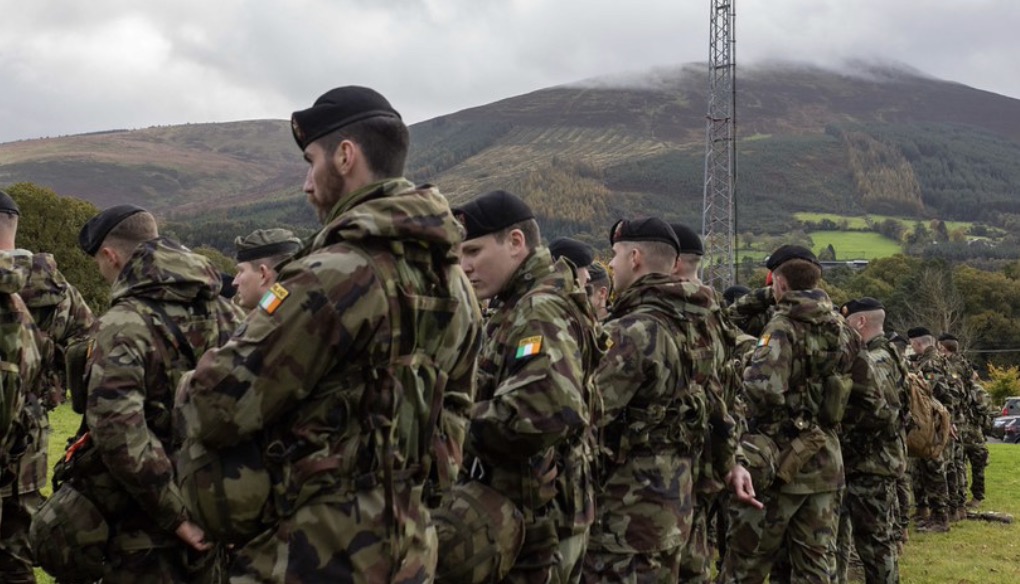
RACO, PDFORRA and RDFRA appeared before the Oireachtas Committee on Defence and National Security and, taken together, their evidence painted an uncomfortable picture of the Irish Defence Forces in 2026: experienced personnel being pulled from already stretched units, officers undertaking 24-hour duties without what their representative association regards as appropriate payment, serious shortages of Air Corps technicians, disputes ending up in court because of deficiencies in the adjudication process, and Reserve reform proceeding at what RDFRA describes as a “glacial pace”.
These are not outside commentators.
They are the representative organisations speaking for the people who are actually serving.
And they deserve to be heard.
Operation Fianna is exposing the pressure underneath
Operation Fianna was established to support An Garda Síochána and protect major events associated with Ireland's Presidency of the Council of the European Union.
It is a substantial military commitment.
The Army, Air Corps and Naval Service are operating through a Joint Task Force, with counter-drone capability, maritime patrols, specialist search teams, aviation assets, intelligence, cyber, medical support and other specialist capabilities involved.
Recent reporting has suggested that, at times, as much as 10% of Defence Forces personnel may be involved in Operation Fianna-related activity.
That should immediately raise a question.
Where are those personnel coming from?
The answer given by RACO is uncomfortable: they are coming from units that were already stretched before Operation Fianna began.
Lt Col Conor King told the Oireachtas committee that every officer and NCO taken into the operation is another experienced person removed from mentoring, supervision and governance elsewhere.
Then came the allegation that should make people in Government sit up.
RACO says senior officers responsible for planning and coordinating elements of the operation are undertaking 24-hour duties connected with maritime patrols, counter-UAS operations, engineer searches and security tasks without receiving an allowance available to some personnel working alongside them.
King called it “blatant exploitation” and described the situation as “Defence on the cheap”.
The Defence Forces has responded that personnel receive allowances agreed through the relevant claims-and-allowances processes and that Time Off In Lieu arrangements are available.
That response needs to be recorded.
But it does not make RACO's allegation disappear.
If RACO says particular officers performing particular duties are falling outside the payment arrangements, then that precise issue deserves a precise answer.
Not a general statement.
PDFORRA is raising a safety issue
PDFORRA's contribution is equally serious.
General Secretary Ger Guinan highlighted shortages of skilled Air Corps technicians and told the committee that the shortage represents both an operational problem and a safety concern.
This is where representative organisations matter.
Their job is not to make departmental briefing papers more comfortable.
Their job is to tell the employer, Government and public when something is wrong.
PDFORRA also raised the continuing absence of an effective adjudication mechanism for disputes.
Guinan's message was extraordinary in its simplicity: the association does not want to keep bringing the State to court.
Yet without an adjudicator, he said, litigation becomes one of the few avenues available.
Earlier this year, reporting also highlighted PDFORRA concerns over millions of euro in outstanding allowances and wider questions around working conditions and remuneration.
These issues are not appearing from nowhere.
They are part of a pattern that representative organisations have been highlighting for years.
And the Reserve is still waiting
RDFRA's Neil Richardson gave the committee another version of the same problem.
Process.
Business cases.
Proposals.
Advice papers.
Requests for further information.
And then more waiting.
Richardson described progress on Reserve reform as moving at a “glacial pace”, warning against what he called the elevation of process over productivity.
That criticism should concern anybody who remembers how often the Reserve has been described as part of the solution to Defence Forces manpower shortages.
A Reserve cannot simultaneously be described as strategically important and treated as administratively peripheral.
RDFRA also challenged the repeated use of an 11,500 personnel figure without properly incorporating planned Reserve strength, arguing that the broader military establishment would be closer to 16,000.
Whether one agrees with every demand from the representative organisations is beside the point.
Government cannot claim to want stronger Defence Forces while regarding the organisations representing those Defence Forces as an inconvenience whenever they describe uncomfortable realities.
Where are the Ministers on the ground?
There is another question IDFVN believes should now be asked.
Ireland's political leadership has spoken repeatedly about security, defence investment and the importance of the EU Presidency.
Minister for Defence Helen McEntee has held international meetings on defence and security, while Minister of State Thomas Byrne has represented Ireland at meetings of EU Defence Ministers and spoken publicly about the importance of strengthening Irish defence capability.
Those engagements matter.
But Operation Fianna is happening here.
On the ground.
Among Irish personnel.
At the time of writing, IDFVN's search of publicly available Department of Defence and Defence Forces material did not identify a comparable ministerial press release or photographic feature showing the Defence Ministers spending time with personnel undertaking the operational duties at the centre of RACO's concerns.
That does not prove that such a visit has never happened privately.
It does raise a legitimate question:
Have the Ministers gone out and seen these working conditions for themselves?
Have they spoken directly with the officers doing the 24-hour duties?
Have they met the technicians whose numbers PDFORRA says are critically low?
Have they sat down with reservists waiting for reforms which appear perpetually to require another business case?
And, perhaps most importantly, are Ministers receiving the unfiltered picture?
The grey suits question
Veterans will recognise the phrase.
The grey suits.
The layers of administration between the soldier, sailor or aircrew member on the ground and the political office where decisions are ultimately taken.
Civil servants have an essential role in the management of Defence. That should not be turned into a caricature.
But administration cannot become insulation.
If three separate representative organisations can walk into Leinster House and describe serious manpower, remuneration, safety and implementation problems, then the question is no longer whether those concerns exist.
They clearly do.
The question is what happens to those concerns once they enter the system.
Are Ministers hearing them directly?
Are they being softened as they travel upward?
Are administrative processes delaying decisions long after the operational problem has been identified?
Those are questions, not conclusions, and Government and the Department of Defence should answer them.
Because there is a danger in allowing briefing papers and implementation plans to become substitutes for reality.
The reality is the officer standing a 24-hour duty.
The technician keeping an aircraft serviceable.
The NCO removed from a unit already short of experienced personnel.
The reservist waiting for promised reform.
And the personnel quietly making Operation Fianna work.
Representative bodies are doing exactly what they are supposed to do
RACO, PDFORRA and RDFRA will not always agree with Government.
Nor should they.
Their value lies precisely in their willingness to say publicly what individual serving personnel often cannot.
When they identify problems, Government should not regard that as disloyalty.
It is a warning system.
Ireland is investing heavily in new military capabilities. A €1.7 billion Defence National Development Plan for 2026 to 2030 has been announced, while major radar and air-defence procurement is progressing.
That investment is significant.
But radar systems do not mentor young soldiers.
Aircraft cannot fly safely without technicians.
Ships cannot sail themselves.
Counter-drone systems require trained people.
And no PowerPoint presentation can replace experienced officers and NCOs.
Operation Fianna may ultimately be judged an operational success.
Indeed, the Defence Forces says the Joint Task Force has strengthened capability development.
But success achieved because people continually absorb additional pressure should not be mistaken for proof that the system is healthy.
Sometimes success simply demonstrates how much more people were prepared to carry.
RACO, PDFORRA and RDFRA have now put their concerns on the public record.
The next move belongs to Government.
Not another working group.
Not another review.
Not another business case disappearing into the system.
Go and meet the people doing the job.
Listen to their representatives.
See the pressure for yourselves.
And then tell the Defence Forces, and the country, what is going to be done about it.
Sources and context
• The Journal, reporting on evidence from RACO, PDFORRA and RDFRA to the Oireachtas Committee on Defence and National Security, September 2026.
• Department of Defence and Defence Forces public material on Operation Fianna, Defence investment and ministerial engagements, checked 18 September 2026.
• The Irish Times reporting on Operation Fianna and Defence Forces personnel commitments, September 2026.